The federal gift, the state fine print, and the lease-tax line item
Federal law hands Verndale businesses the most generous expensing rules in years - and Minnesota's own tax code decides how much of that generosity survives on the state return. Both layers are below with official sources.
Section 179 lets a Verndale business expense up to $2,560,000 of 2026 equipment purchases immediately (phase-out above $4,090,000, IRS Rev. Proc. 2025-32), and 100% bonus depreciation is back permanently for equipment placed in service after January 19, 2025.
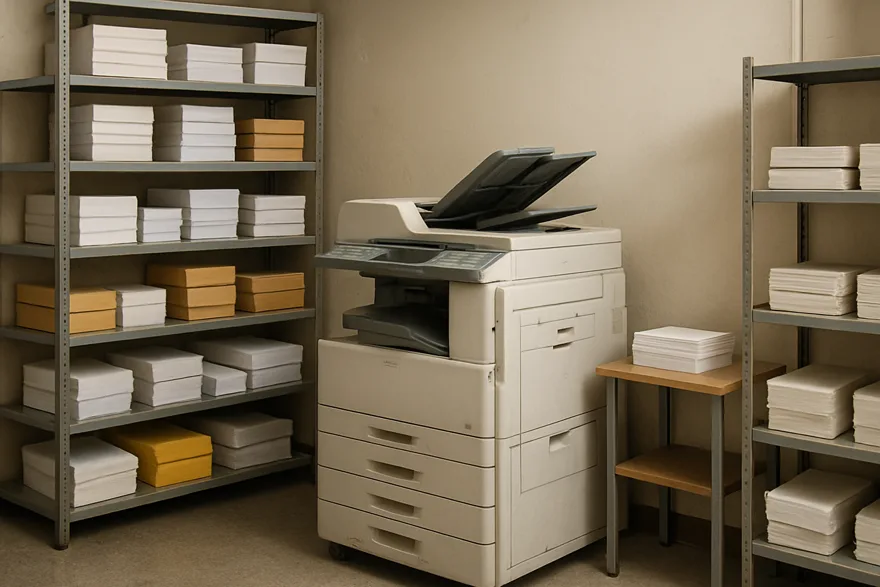
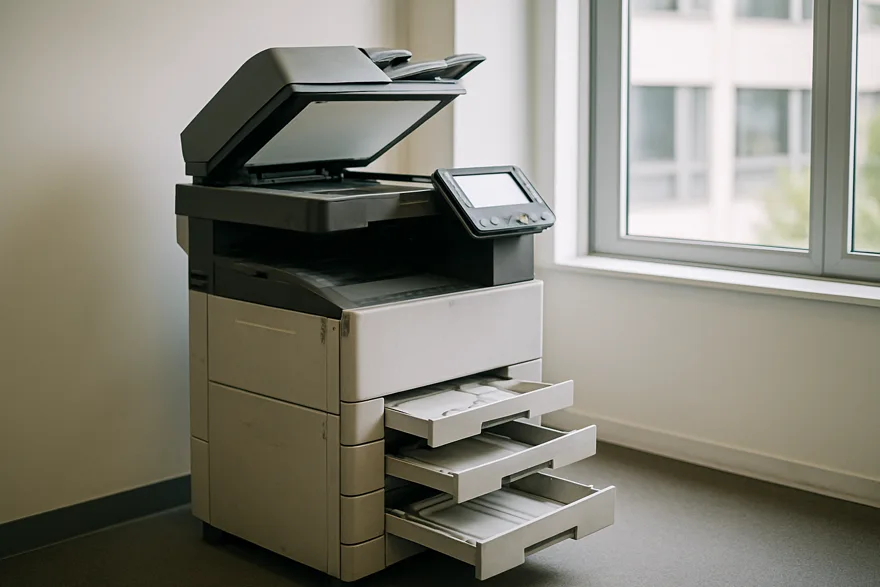
Minnesota applies its 6.875% state sales tax to equipment lease payments (Minn. Stat. 297A.61 subd. 4 (retail sale includes lease/rental); Minn. R. 8130.0400; MN DOR Taxable Sales guide) - on a $300-a-month copier lease that tax rides along every single month, before local add-ons.
Verndale, Minnesota has about 512 residents, and its equipment market prices on dealer territory, service density and volume - not on the machine's list price.
Equipment tax math has two layers in Minnesota: sales tax on the lease or purchase itself, and income-tax depreciation rules that decide how fast the cost comes off your taxable income. Both are below, with official sources.
The 2026 federal rules are the most buyer-friendly in years: Section 179 up to $2,560,000 and permanent 100% bonus depreciation. But state income tax does not automatically follow - several states cap Section 179 at a fraction of the federal number, and Minnesota's position is on this page.

The 2026 numbers
| Equipment category | 2026 market range | The number that actually matters |
|---|---|---|
| Copier / MFP lease (small business) | $100-$400/month | The 60-month total plus the service agreement - not the payment |
| Copier service (cost per copy) | $0.01-$0.015 per page B&W; $0.06-$0.12 per page color | Minimum page billing and 5-10% annual escalators change the real rate |
| Forklift - new | $22,000-$55,000 | Electric adds a battery/charger budget; duty cycle picks the powertrain |
| Forklift - used / rental | $12,000-$25,000 used; $180-$400/day rental | Rental is the honest answer for seasonal peaks |
| Office coffee service | $5-$14 per person/month | The 'free machine' is real - the margin is in the coffee |
| Equipment financing (2026) | 7-25% APR typical range | Well-qualified borrowers commonly see 9-15% - quote the financing too |
| Section 179 expensing (2026) | up to $2,560,000 | Phases out above $4,090,000; state rules may differ - see below |
Put an equipment tax question out to competing bid before talking price
Two free marketplace paths: one form brings back multiple hand-selected sellers who know they are competing for the job. Competing quotes are the only pricing discipline this industry consistently respects.
External links go to the marketplaces' own sites and forms. This site may earn a referral fee at no cost to you - it never changes the data above, and no individual vendor pays to appear in our research.
The Minnesota tax rules that change equipment math
| Question | Minnesota answer |
|---|---|
| Sales tax on equipment leases | Taxable at 6.875% state rate - Minnesota taxes leases and rentals of tangible personal property (including contractor's and business equipment) as retail sales at the 6.875% state rate; local sales taxes can. |
| Section 179: state income tax | Follows the federal limits - Minnesota fully conformed to federal Section 179 for property placed in service after Dec 31, 2019 (the old 80% addback repealed), but does. |
Since July 1, 2015 Minnesota grants an up-front sales tax exemption on capital equipment used primarily (50%+ of operating time) to manufacture, fabricate, mine, or refine products for retail sale - buyers give the vendor Form ST3 at purchase instead of paying the tax and filing for a refund.
This page is independent research, not tax, legal or purchasing advice. Tax treatment varies by state and entity type and changes with legislation - verify current rules with your CPA and your state revenue department before acting.
The stale-number warning
Articles still circulate quoting a Section 179 cap near $1.25 million and a bonus-depreciation phase-down to 40%. Both are obsolete: the 2025 tax law set the 2026 cap at $2,560,000 and restored 100% bonus permanently. Check publication dates before trusting any equipment tax article - including this one: our figures cite IRS Rev. Proc. 2025-32 directly.
What this means in Verndale
The most expensive line in an equipment lease is the one that renews itself. Miss a notice window - commonly 90 days before term end - and most contracts quietly sign you up for another 12 months.
This page is independent research, not tax, legal or purchasing advice. Tax treatment varies by state and entity type and changes with legislation - verify current rules with your CPA and your state revenue department before acting.
Common questions
What is Section 179 and how much can I deduct in 2026?
It lets a business expense equipment purchases immediately instead of depreciating them over years. For tax years beginning in 2026 the limit is $2,560,000, phasing out above $4,090,000 of purchases - figures straight from IRS Rev. Proc. 2025-32. Beware stale articles quoting caps near $1.25 million: the 2025 tax law roughly doubled the ceiling.
Can I negotiate an equipment service contract?
Before signature, almost everything moves: minimum page counts, escalator percentages, consumables exclusivity, response-time commitments and end-of-term fees are all standard negotiation items - dealers expect it. After signature, almost nothing moves. The leverage window is exactly as long as your competing quotes are alive.
Does my state tax equipment leases?
Most states apply sales tax to each lease payment, a few tax the deal upfront, and a handful have no sales tax at all - while cities can stack their own lease taxes on top (Chicago's is the famous one). The state's treatment and official source are on this page; it can move a real monthly cost by several percent.
Should I lease or buy office equipment?
Keep it long and have the cash or credit: buying usually wins, especially with Section 179 letting you expense up to $2,560,000 of 2026 equipment purchases immediately. Replace machines often or need to protect cash flow: leasing is rational. Never decide on monthly payment alone - stack the full term total against purchase price minus tax savings minus resale value.
What happens at the end of an equipment lease?
One of three things, and the contract decides which: you return the machine (watch return-shipping and refurbishment fees), buy it (at $1, or at fair market value the lessor sets), or do nothing - in which case the evergreen clause renews you for another term. The no-decision option is the only one that is never in your interest.
Put an equipment tax question out to competing bid before talking price
Two free marketplace paths: one form brings back multiple hand-selected sellers who know they are competing for the job. Competing quotes are the only pricing discipline this industry consistently respects.
External links go to the marketplaces' own sites and forms. This site may earn a referral fee at no cost to you - it never changes the data above, and no individual vendor pays to appear in our research.